
Vantastic Upgrades: From Parts to Perfection
Nov 03, 2025
A Sprinter works out of the box, but the stock build isn't optimized for either of the two jobs most owners ask it to do: hauling materials all week or living in it on weekends. Below are the upgrades we install most often, split by where they go on the van, with notes on when a tradesperson needs something different than a vanlifer.
Interior Parts & Upgrades (For #Vanlife Enthusiasts)
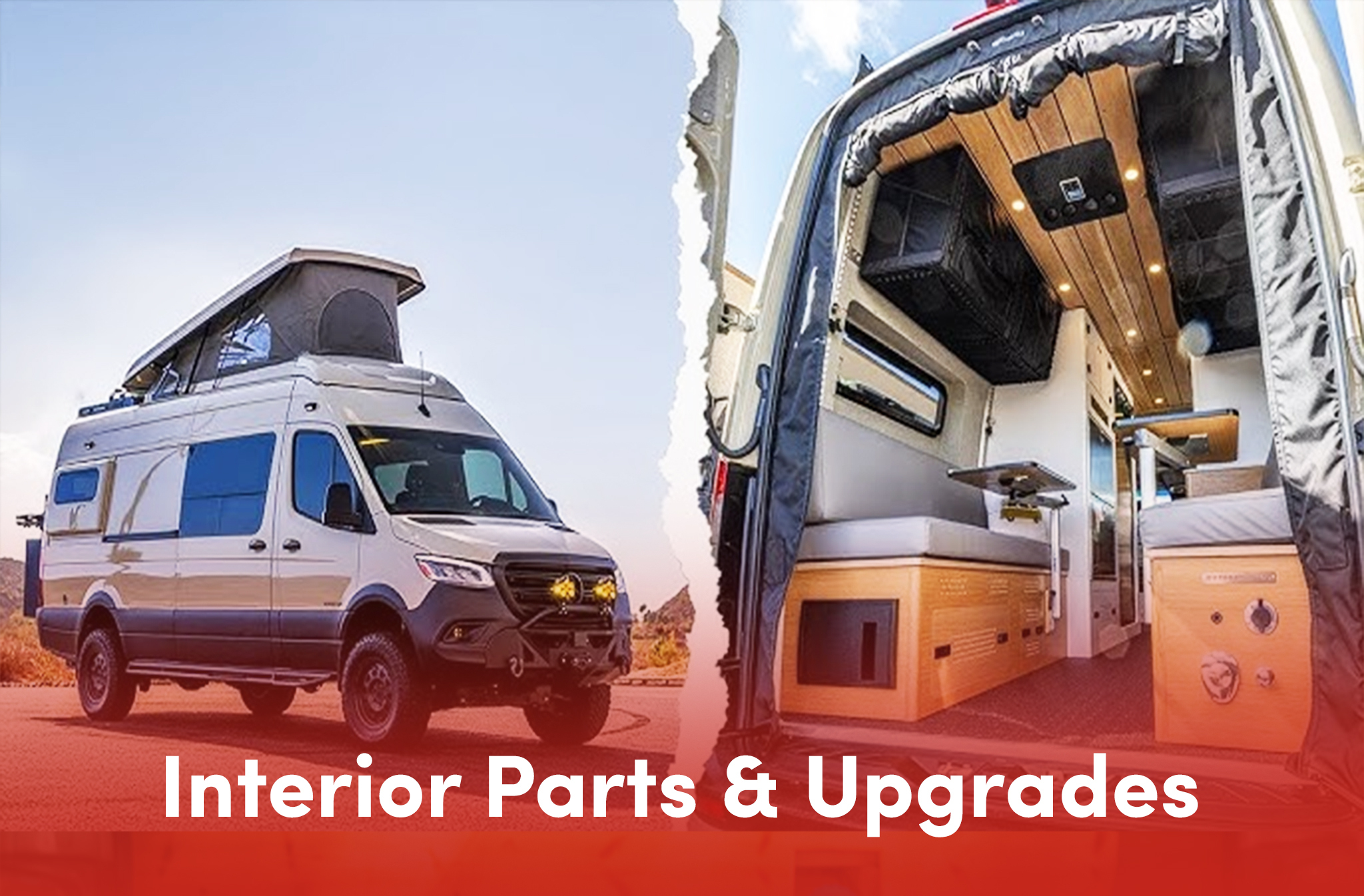
The inside of the van is where you'll spend every night, so this is usually where a build starts.
Insulation. Spray foam in the roof, walls, and wheel wells is the single biggest comfort upgrade you can make. It holds heat in the mountains and keeps the cab from cooking in Moab. Do this before the walls go up — you won't want to pull them off later.
Lighting. Run 12V LED puck lights or dimmable strips off your house battery. Warm white (2700–3000K) reads a lot more like a cabin and less like a loading dock. Add a separate reading light above the bed and a red-tint option if you're parked at a trailhead and don't want to blow your night vision.
Flooring. Go with vinyl or rubber mats over the factory floor. They clean up in minutes after a muddy dog or a sandy beach day, and they add a bit of thermal break from the steel underneath.
Furniture. Keep it multifunctional. A foldable bed platform that doubles as a bench, a pull-out kitchen with one good burner, and under-bed storage will get you 80% of the way to a livable build without eating floor space.
Interior Parts & Upgrades (For Tradespeople)
For a work van, the priority flips: storage, lighting, and floor protection — in that order.
Shelving. The cargo area from the factory is a blank box. Modular aluminum shelving gives every tool a home, keeps bins from sliding on hard stops, and saves the 10 minutes a day you'd otherwise spend digging.
LED work lights. Wire them into the cargo-door switch so they come on when you open the back. No more headlamp fumbling at 6 AM.
Heavy-duty floor mats. Same floor mats as the vanlife side, but there's a second reason to run them in a work van: they protect the resale value of the metal underneath when you're dragging in sheetrock or sliding ladders across the floor.
Mobile workstation. A fold-down desk above the wheel well is all most guys need to write up a quote or a change order without going back to the cab.
Exterior Parts & Accessories (For #Vanlife Enthusiasts)
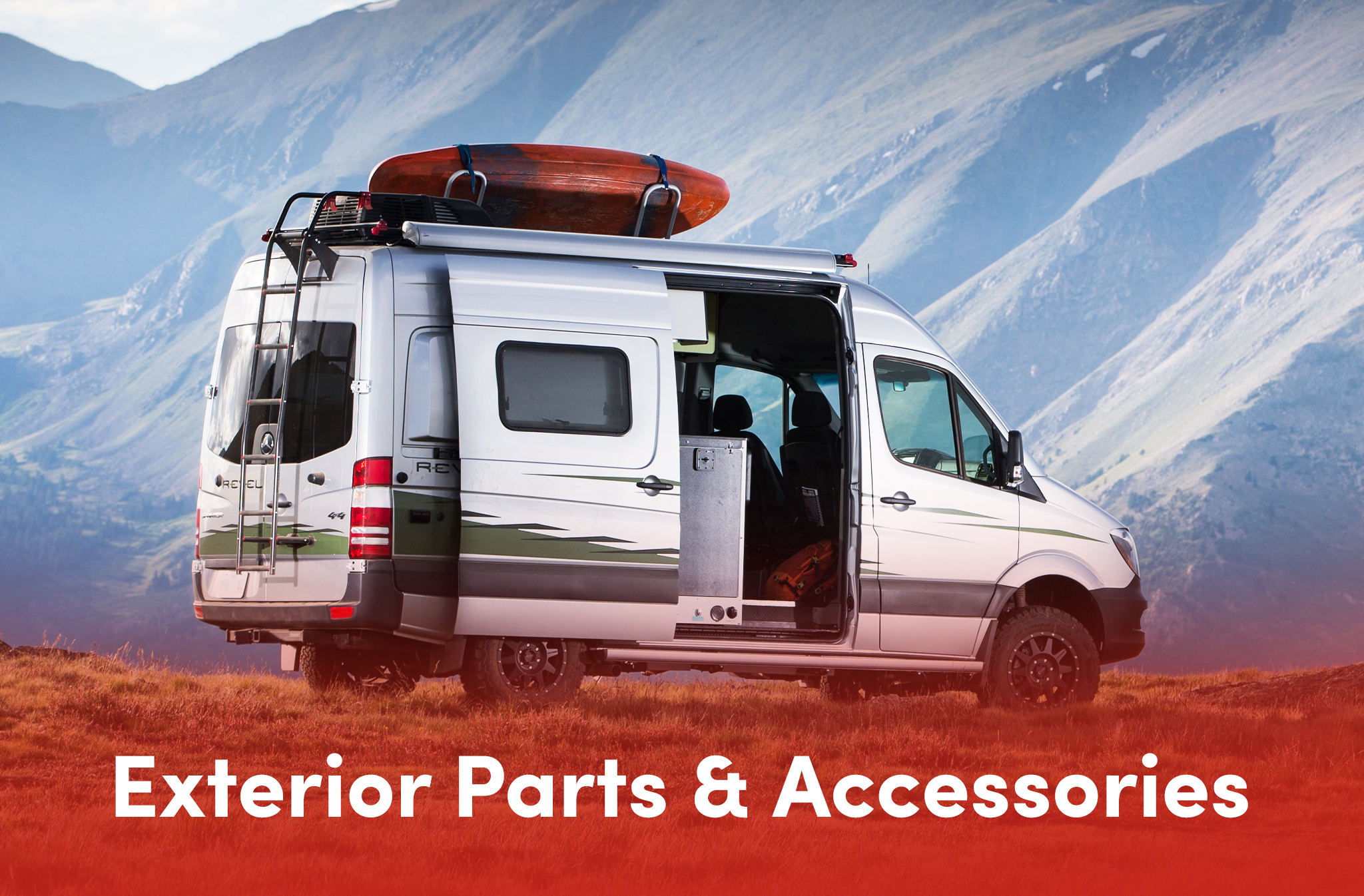
Roof rack. The Slimpro Van Rack Kit sits low enough to clear most garage doors and gives you a flat platform for a rooftop tent, solar panels, or a couple of kayaks. Pair it with the Slimpro Van Ladder so you're not climbing on the tires to get up there.
Awning / rear step. The Outlaw Rear Step gives you a clean place to stand while cooking off the back and keeps the rear doors from collecting mud. An awning over the slider turns the side of the van into an outdoor kitchen when the weather's cooperating.
Grille guard. If you're getting into dirt roads or two-tracks, a Sprinter front grille guard is cheap insurance against the first deer strike or rock kick-up. Replacing the nose of a Sprinter is not cheap.
Bug screens. Magnetic bug screens on the slider and rear doors are the difference between sleeping with airflow and sleeping with mosquitoes. Easy to install, easy to throw in a bin when you don't need them.
Exterior Parts & Accessories (For Tradespeople)
The work-van version of the exterior is about carrying more and protecting what's already there.
Modular roof rack. A modular roof rack is what lets you carry conduit, lumber, or ladders without giving up cargo space inside. If you run ladders daily, look for a rack with a dedicated load stop up front.
Side ladder. The same Slimpro Van Ladder works here — and it'll keep your worker's comp rate happy.
Rear step / lockable storage. Outlaw Rear Steps or bolt-on lockboxes let you stash fuel, water, or a small tool bag outside the cargo area, which keeps the inside of the van cleaner and gives you somewhere to put wet or dirty gear.
Heavy-duty grille guard. For job-site driving, the heavy-duty grille guard is the one to run. Unpaved lots and stray rebar are brutal on a stock front end.
Mounted work lights. Roof- or corner-mounted LED floods turn a dark parking lot into a full job site. If you load or unload before sunrise, you'll use them every day.
Suspension & Mechanical Upgrades (For #Vanlife Enthusiasts)
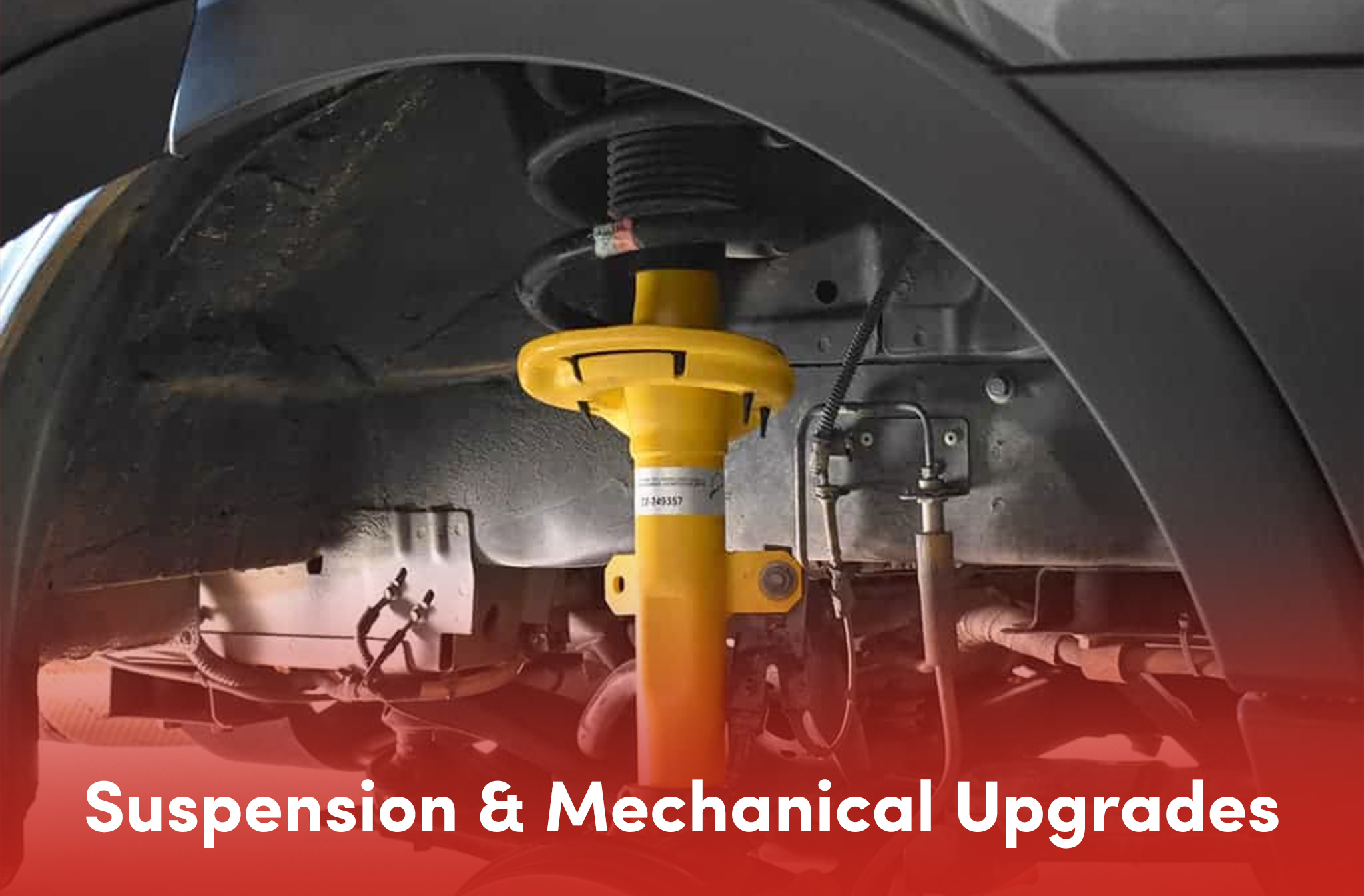
A loaded build gets heavy fast. Water, batteries, a fridge, and a week of food will put you well into the upper half of the van's payload — and the factory suspension wasn't tuned for a rolling apartment.
Airbag suspension. The Sprinter Van Airbag Suspension Kit lets you dial in ride height as you add or remove weight. Driving empty feels stock; loaded up for a month out, it keeps the rear from squatting and scraping on driveways.
Shocks and struts. Factory shocks start giving up around 60–80k miles on a build. New Sprinter shocks and struts cut the body roll on winding roads and quiet down the ride on washboard.
Brakes. The heavier the build, the more the stock brakes have to say about it. Sprinter brake kits handle the extra weight of a camper conversion without fading on long mountain descents — a real concern if you're dropping off a pass with 800 lbs of house on your back.
Cooling system. If you're idling a lot in the desert or spending time on slow forest roads in summer, an aftermarket oil cooler is worth looking at. The factory cooling is sized for a delivery van, not a loaded camper in 105°F.
Suspension & Mechanical Upgrades (For Tradespeople)
Work vans carry heavy, and they carry it every day. Mechanical upgrades pay for themselves in brake jobs you don't do and suspension rebuilds that happen later.
Airbag suspension. The Sprinter airbag suspension is a no-brainer for anyone running at or near payload. It keeps the rear level, which keeps the headlights aimed right and keeps your load from shifting every time you take an on-ramp.
Brake kit. Same Sprinter brake kits as the vanlife recommendation — and if anything, more important here. Stopping 8,000 lbs of van and tools in traffic is where factory pads start to feel undersized.
Heavy-duty shocks and struts. HD shocks and struts hold up better when you're hitting loaded-lot potholes five days a week. You'll feel the difference the first time you take a familiar alley.
Engine cooling. A performance chip can help with long highway runs, but the upgrade most tradespeople actually need is better cooling — low-speed job-site driving with the AC cranked is harder on the Sprinter's cooling system than it looks.
If you want help picking the right kit for your year and trim, the team at SprinterStore.com works on Sprinters every day — call or chat and we'll point you at what fits.